


- TLV1117LV18DCYT - 集成电路(IC) > 电源管理(PMIC) > 稳压器 - 线性
- AM62A32ASMSIANFRQ1 - 集成电路(IC) > 嵌入式 > 微处理器
- TPS75318QPWPREP - 集成电路(IC) > 电源管理(PMIC) > 稳压器 - 线性
- TPS71712QDRVRQ1 - 集成电路(IC) > 电源管理(PMIC) > 稳压器 - 线性
- TPS63820YBGR - 集成电路(IC) > 电源管理(PMIC) > 稳压器 - DC-DC 开关稳压器
- MSP430F1612IRTDR - 集成电路(IC) > 嵌入式 > 微控制器
- SN65LVDS151DAR - 集成电路(IC) > 接口 > 串行器,解串器
- REG104FA-5KTTTG3 - 集成电路(IC) > 电源管理(PMIC) > 稳压器 - 线性
- LP2998EVAL - 开发板,套件,编程器 > 评估板 > 线性稳压器评估板
- SN74ABT646DGVRE4 - 逻辑 - 缓冲器,驱动器,接收器,收发器
- UCC33421EVM-092 - 开发板,套件,编程器 > 评估板 > DC/DC 和 AC/DC(离线)SMPS 评估板
- DAC712UB - 集成电路(IC) > 数据采集 > 数模转换器(DAC)
- ADS127L18IRSHT - 集成电路(IC) > 数据采集 > 模数转换器(ADC)
- TMX320VC5472GHK - 集成电路(IC) > 嵌入式 > DSP(数字信号处理器)
- CS4103VHG - 集成电路(IC) > 接口 > 专用
- MSP-TS430PW20 - 开发板,套件,编程器 > 可编程适配器,插座
- SN74LVC2G241YEAR - 集成电路(IC) > 逻辑 > 缓冲器,驱动器,接收器,收发器
- TPS7A8500RGRR - 集成电路(IC) > 电源管理(PMIC) > 稳压器 - 线性
- LM3881MME/NOPB - 集成电路(IC) > 电源管理(PMIC) > 电源控制器,监视器
- INA199A1RSWR - 集成电路(IC) > 线性 > 放大器 > 仪器,运算放大器,缓冲器
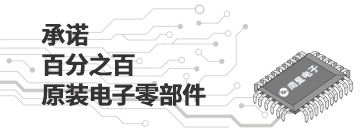


TPS2320 - 具有独立通道电路中断、工作态低电平使能输入的 3-13V 双路热交换 IC
TPS2320是TI德州仪器公司的一款热插拔控制器(正48V)产品,TPS2320是具有独立通道电路中断、工作态低电平使能输入的 3-13V 双路热交换 IC,本站介绍了TPS2320的封装应用图解、特点和优点、功能等,并给出了与TPS2320相关的TI元器件型号供参考。
TPS2320 - 具有独立通道电路中断、工作态低电平使能输入的 3-13V 双路热交换 IC - 热插拔控制器(正48V) - 保护、监控和热插拔 - 德州仪器
The TPS2320 and TPS2321 are dual-channel hot-swap controllers that use external N-channel MOSFETs as high-side switches in power applications. Features of these devices, such as overcurrent protection (OCP), inrush-current control, and the ability to discriminate between load transients and faults, are critical requirements for hot-swap applications.
The TPS2320/21 devices incorporate undervoltage lockout (UVLO) to ensure the device is off at startup. Each internal charge pump, capable of driving multiple MOSFETs, provides enough gate-drive voltage to fully enhance the N-channel MOSFETs. The charge pumps control both the rise times and fall times (dv/dt) of the MOSFETs, reducing power transients during power up/down. The circuit-breaker functionality combines the ability to sense overcurrent conditions with a timer function; this allows designs such as DSPs, that may have high peak currents during power-state transitions, to disregard transients for a programmable period.
DISCH1, DISCH2 –DISCH1 and DISCH2 should be connected to the sources of the external N-channel MOSFET transistors connected to GATE1 and GATE2, respectively. These pins discharge the loads when the MOSFET transistors are disabled. They also serve as reference-voltage connections for internal gate voltage-clamp circuitry.
ENABLE or ENABLE –ENABLE for TPS2320 is active low. ENABLE for TPS2321 is active high. When the controller is enabled, both GATE1 and GATE2 voltages will power up to turn on the external MOSFETs. When the ENABLE pin is pulled high for TPS2320 or the ENABLE pin is pulled low for TPS2321 for more than 50 µs, the gate of the MOSFET is discharged at a controlled rate by a current source, and a transistor is enabled to discharge the output bulk capacitance. In addition, the device turns on the internal regulator PREREG (see VREG) when enabled and shuts down PREREG when disabled so that total supply current is much less than 5µA.
FAULT–FAULT is an open-drain overcurrent flag output. When an overcurrent condition in either channel is sustained long enough to charge TIMER to 0.5 V, the overcurrent channel latches off and pulls FAULT low. The other channel will run normally if not in overcurrent. In order to turn the channel back on, either the enable pin has to be toggled or the input power has to be cycled.
GATE1, GATE2 – GATE1 and GATE2 connect to the gates of external N-channel MOSFET transistors. When the device is enabled, internal charge-pump circuitry pulls these pins up by sourcing approximately 15µA to each. The turnon slew rates depend upon the capacitance present at the GATE1 and GATE2 terminals. If desired, the turnon slew rates can be further reduced by connecting capacitors between these pins and ground. These capacitors also reduce inrush current and protect the device from false overcurrent triggering during power up. The charge-pump circuitry will generate gate-to-source voltages of 9 V-12 V across the external MOSFET transistors.
IN1, IN2 – IN1 and IN2 should be connected to the power sources driving the external N-channel MOSFET transistors connected to GATE1 and GATE2, respectively. The TPS2320/TPS2321 draws its operating current from IN1, and both channels will remain disabled until the IN1 power supply has been established. The IN1 channel has been constructed to support 3-V, 5-V, or 12-V operation, while the IN2 channel has been constructed to support 3-V or 5-V operation
ISENSE1, ISENSE2, ISET1, ISET2 – ISENSE1 and ISENSE2, in combination with ISET1 and ISET2, implement overcurrent sensing for GATE1 and GATE2. ISET1 and ISET2 set the magnitude of the current that generates an overcurrent fault, through external resistors connected to ISET1 and ISET2. An internal current source draws 50 µA from ISET1 and ISET2. With a sense resistor from IN1 to ISENSE1 or from IN2 to ISENSE2, which is also connected to the drains of external MOSFETs, the voltage on the sense resistor reflects the load current. An overcurrent condition is assumed to exist if ISENSE1 is pulled below ISET1 or if ISENSE2 is pulled below ISET2. To ensure proper circuit breaker operation, VI(ISENSE1) and VI(ISET1) should never exceed VI(IN1). Similarly, VI(ISENSE2) and VI(ISET2) should never exceed VI(IN2).
TIMER – A capacitor on TIMER sets the time during which the power switch can be in overcurrent before turning off. When the overcurrent protection circuits sense an excessive current, a current source is enabled which charges the capacitor on TIMER. Once the voltage on TIMER reaches approximately 0.5 V, the circuit-breaker latch is set and the power switch is latched off. Power must be recycled or the ENABLE pin must be toggled to restart the controller. In high-power or high-temperature applications, a minimum 50-pF capacitor is strongly recommended from TIMER to ground, to prevent any false triggering.
VREG – VREG is the output of an internal low-dropout voltage regulator, where IN1 is the input. The regulator is used to generate a regulated voltage source, less than 5.5 V, for the device. A 0.1-μF ceramic capacitor should be connected between VREG and ground to aid in noise rejection. In this configuration, upon disabling the device, the internal low-dropout regulator will also be disabled, which removes power from the internal circuitry and allows the device to be placed in low-quiescent-current mode. In applications where IN1 is less than5.5 V, VREG and IN1 may be connected together. However, under these conditions, disabling the device will not place the device in low-quiescent-current mode, because the internal low-dropout voltage regulator is being bypassed, thereby keeping internal circuitry operational. If VREG and IN1 are connected together, a 0.1-µF ceramic capacitor between VREG and ground is not needed if IN1 already has a bypass capacitor of 1µF to 10µF.
- Dual-Channel High-Side MOSFET Drivers
- IN1: 3 V to 13 V; IN2: 3 V to 5.5 V
- Output dV/dt Control Limits Inrush Current
- Independent Circuit-Breaker With Programmable Overcurrent Threshold and Transient Timer
- CMOS- and TTL-Compatible Enable Input
- Low, 5-µA Standby Supply Current (Max)
- Available in 16-Pin SOIC and TSSOP Package
- –40°C to 85°C Ambient Temperature Range
- Electrostatic Discharge Protection
- LM99 - 采用 TruTherm 技术且具有 SMBus 接口的远程和本地温度传感器
- CC1101 - 低功耗(低于 1GHz)射频收发器
- TPS3839L30 - 150nA 超低电流、超小型电压监控器
- TMS320F280260 - Piccolo 微控制器
- SN74LVC1G373 - 具有三态输出的单路 D 类锁存器
- MSP430F2418 - 16 位超低功耗微控制器,具有 116KB 闪存、8KB RAM、12 位 ADC、2 个 USCI 和 HW 乘法器
- LM5122 - 具有多相功能的 LM5122、LM5122Q 宽输入同步升压控制器
- LMH0394 - 3G HD/SD SDI 低功耗远距离自适应电缆均衡器
- BQ4845 - RTC IC W NVSRAM 控制器、看门狗定时器、加电复位、中断与低电池电量警告
- UCC28051 - PFC 控制器,用于要求符合 IEC 1000-3-2 的低至中功率应用领域

